

Introduction
A tiny backyard can feel like a design problem at first, but it can also become the most charming space in the home. With the right small backyard turf ideas, even a narrow side yard, concrete patio, or awkward little corner can turn into a soft green place for morning coffee, pets, kids, guests, or quiet evenings.
This topic matters because small outdoor areas are easy to ignore. They collect old chairs, cracked pots, and random storage boxes. Yet a neat turf layout can make the same space feel clean, calm, and ready to use. It can also reduce the need for regular mowing and watering. The EPA notes that residential outdoor water use in the United States accounts for nearly 8 billion gallons each day, mainly for landscape irrigation.
Still, turf is not magic. It needs smart planning, good drainage, shade awareness, and proper edging. Synthetic turf can get hotter than natural grass in direct sun, so comfort matters as much as appearance. Reviews of synthetic grass surfaces show that surface and air temperatures can increase compared with natural grass, especially in sunny conditions.
The good news is simple: you do not need a huge lawn to create a lovely outdoor room. You need proportion, texture, and a clear reason for each square foot. Let’s walk through practical ideas that look beautiful, feel realistic, and work in real homes.
Table of Contents
- Why Turf Works Well in Small Backyards
- Small Backyard Turf Ideas That Work in Real Homes
- Choosing the Right Turf Style
- Layout Ideas for Different Backyard Shapes
- Turf with Pavers, Gravel, Decking, and Plants
- Small Backyard Turf Ideas for Seating and Entertaining
- Pet-Friendly and Kid-Friendly Turf Spaces
- Modern Small Backyard Turf Ideas for Low Maintenance Living
- Drainage, Heat, and Installation Details
- Budget and Cost Planning
- Common Mistakes to Avoid
- FAQs
- Conclusion
Why Turf Works Well in Small Backyards
Artificial grass can be a smart choice for compact outdoor spaces because it gives instant structure. A small yard often looks messy when the ground surface is unclear. Turf creates one clean visual base, then everything else becomes easier to place.
It also gives the eye a soft break from hard materials. Many small yards are surrounded by walls, fences, brick, concrete, or paving. A green turf section warms the space and makes it feel more inviting. Even a 6-by-10-foot patch can make a patio feel less harsh.
In reality, the best backyard design is not about filling every inch. It is about making the space feel intentional. Turf can act like an outdoor rug. It defines the sitting zone, play zone, pet zone, or path without needing complicated construction.
For renters or homeowners who do not want constant lawn care, turf can also feel easier to manage. There is no mowing, reseeding, muddy patch repair, or seasonal brown lawn panic. That said, it still needs brushing, rinsing, debris removal, and proper installation.
Small Backyard Turf Ideas That Work in Real Homes
The most useful designs start with how you actually live. Do you want a place for your dog? A tiny putting green? A soft play spot for children? A clean patio extension? The best small backyard turf ideas start with one main purpose, then build around it.
Here are practical directions that work well in real homes:
- A small turf rectangle framed by pavers for a clean modern look
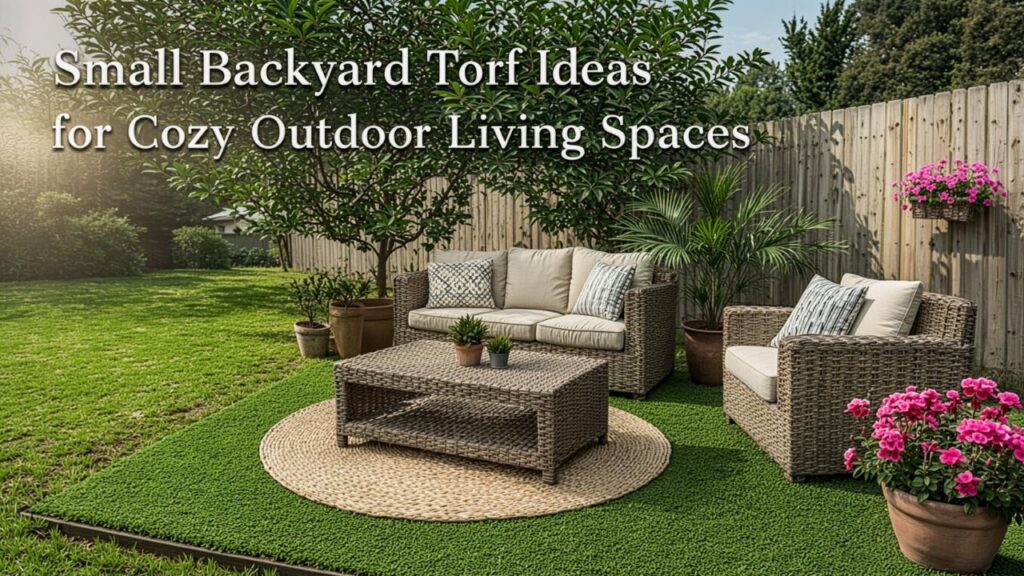
- A turf “rug” under outdoor furniture
- A narrow turf strip beside a walkway
- Turf surrounded by raised garden beds
- A mini putting green in one corner
- A dog-friendly turf run with drainage
- Turf between stepping stones
- A soft play area beside a patio
- A courtyard-style turf square with wall planters
- A curved turf patch to soften a boxy yard
The trick is to avoid making turf look like a fake mini football field. Add borders, plants, stones, wood, or seating so it feels designed rather than dropped into place.
Define One Main Use First
Before choosing turf, ask one honest question: what should this backyard do most days?
A small backyard usually cannot do everything at once. If you try to fit a dining area, fire pit, dog run, kids’ play area, garden, storage bench, and water feature into one tiny space, the result can feel crowded. Pick the main use first.
For example, a young family may need soft ground for play. A pet owner may care more about odor control and easy rinsing. Someone who loves hosting may want turf around a compact seating area. A golfer may want a small putting green with a neat cup and fringe.
Once the main use is clear, the layout becomes easier.
Treat Turf Like an Outdoor Rug
This is one of the simplest design tricks. Instead of covering the whole yard wall to wall, place turf only where you want softness.
Imagine a small patio with four lounge chairs. A square or rectangle of turf under the chairs can create the feeling of an outdoor living room. Add a slim gravel border and two tall planters, and suddenly the yard feels styled.
This approach works especially well in urban homes, townhouses, narrow courtyards, and rental-friendly setups.
Use Borders to Make Turf Look Finished
Turf without edging often looks unfinished. The edges curl, the shape feels vague, and weeds or soil can creep in from the sides.
Good border options include:
- Concrete pavers
- Brick edging
- Black metal landscape edging
- Pressure-treated timber
- Composite deck boards
- Gravel trenches
- Raised planters
- Stone blocks
A crisp border makes even budget turf look more polished.
Choosing the Right Turf Style
Not all turf looks the same. Some styles are short and neat. Others are thick, soft, and more natural. For a small backyard, the wrong turf can look too shiny, too flat, or too obviously artificial.
Look for turf with mixed blade tones. Real grass is rarely one solid green color. A blend of olive, lime, and deeper green usually looks better than bright emerald turf. A little brown thatch at the base can also make the surface feel more natural.
Pile Height
Pile height means the length of the turf blades. For small yards, a medium pile usually works best. Very long blades can flatten quickly in high-use areas. Very short blades can look more like sports carpet.
A good general range for backyard use is around 30–40 mm, depending on the product and foot traffic. For pets, shorter turf can be easier to clean. For lounging, slightly thicker turf feels softer under bare feet.
Density and Backing
Dense turf looks fuller and hides the backing better. Cheap, thin turf may show lines or bald spots, especially in small areas where every detail is visible.
The backing matters too. A quality backing allows drainage and helps the turf stay stable. In small backyards with pets, rain, or washing, drainage holes are not optional. They are part of what keeps the area usable.
Infill Choices
Infill helps blades stand upright and adds weight. Common options include silica sand, coated sand, cooling infill, and pet-safe infill. For families with dogs, odor-control infill can be worth considering.
Do not choose infill based only on price. In a tight yard, smell and heat can become noticeable fast. A small space traps odors more easily than a large open lawn.
Layout Ideas for Different Backyard Shapes
Every small backyard has its own challenge. Some are long and narrow. Some are square but shaded. Some are mostly concrete. Others have odd corners or a fence that makes the area feel boxed in.
A good layout works with the shape instead of fighting it.
Long and Narrow Backyards
Long narrow yards can feel like hallways. Turf can help, but only if you break the length visually.
Try this layout:
| Zone | Design Choice | Why It Works |
|---|---|---|
| Entrance area | Pavers or decking | Keeps the first step clean |
| Middle section | Turf strip with stepping stones | Adds softness and movement |
| End area | Bench, plants, or small fire bowl | Creates a destination |
| Instead of one plain strip, add a winding stepping path or offset pavers. This creates rhythm and makes the yard feel wider. |
Small Square Backyards
Square yards can look plain if everything is centered. Try placing turf slightly off-center and using one side for planting or seating.
A square turf patch bordered by gravel can look very neat. Add a bench along one fence and tall planters behind it. This gives the space depth without stealing too much floor area.
L-Shaped Backyards
An L-shaped backyard often has a forgotten corner. Use turf to connect both parts of the yard. One side can become a seating zone, while the smaller side becomes a pet area, play patch, or planting nook.
The goal is flow. Avoid making the L-shape feel like two disconnected leftover spaces.
Concrete Backyards
Concrete yards can feel hot and hard. Turf can soften them quickly, but drainage and base preparation matter.
If turf is installed over concrete, water needs somewhere to go. A drainage layer, slight slope, and proper adhesive pattern can help prevent puddles. For a temporary setup, outdoor turf tiles may work better than permanent installation.
Turf with Pavers, Gravel, Decking, and Plants
Turf looks best when it is part of a full landscape design. The mix of materials creates contrast. Green turf feels softer beside stone, warmer beside wood, and cleaner beside gravel.
[Infographic: “Small Backyard Turf Layout Formula” showing 40% turf, 25% seating, 20% plants, 10% path, 5% lighting or decor.]
Turf and Pavers
Turf between pavers is a modern favorite. It works well for pathways, patios, and small courtyards.
Large concrete pavers with turf joints can make a compact yard feel clean and architectural. The pavers give structure, while the turf adds softness. This combination is also great for people who want green without covering the whole space.
Use pavers for heavy furniture zones. Use turf for the visual softness around them. That balance keeps chairs from sinking or rocking.
Turf and Gravel
Gravel is affordable, flexible, and easy to shape. A gravel border around turf gives a finished look and helps with drainage.
Pea gravel feels relaxed and cottage-like. Crushed granite looks sharper and more modern. Black gravel creates a dramatic contrast, especially with white walls or light pavers.
A common mistake is using gravel that is too loose near turf. It can scatter across the grass and become annoying. Use edging between the materials.
Turf and Decking
Wood or composite decking can make a tiny yard feel like a boutique hotel patio. Add turf beside it, and the space feels less rigid.
A raised deck with a turf rectangle at ground level works beautifully in small homes. The deck becomes the sitting area. The turf becomes the soft green view.
This is especially useful when the backyard slopes slightly. Rather than forcing everything flat, create two levels.
Turf and Plants
Plants stop turf from looking too artificial. Even low-maintenance synthetic grass feels more natural when paired with living greenery.
Good plant pairings include:
- Lavender
- Boxwood
- Ornamental grasses
- Rosemary
- Dwarf olive trees
- Ferns for shade
- Succulents for dry climates
- Jasmine or climbing vines
- Hydrangeas in softer cottage-style yards
Use vertical planting if floor space is tight. Wall planters, trellises, and narrow raised beds add life without crowding the ground.
Small Backyard Turf Ideas for Seating and Entertaining
Small yards can still host people. They just need compact furniture and a layout that does not block movement.
A turf seating area should feel cozy, not cramped. Choose fewer pieces and leave breathing room around them. Two chairs and a small table may work better than a full outdoor sofa.
These small backyard turf ideas are especially useful for entertaining:
- Turf under a bistro set for morning coffee
- A curved bench along the fence
- Built-in seating with storage underneath
- A turf lounge zone beside a small deck
- Floor cushions on turf for casual evenings
- A fire bowl on pavers next to turf, not directly on it
- String lights above the seating area
- Tall planters behind the seats for privacy
Cozy Coffee Corner
A tiny coffee corner needs very little space. A 5-by-7-foot turf patch can hold two chairs and a side table.
Place the chairs at a slight angle instead of straight against the wall. This feels more conversational. Add one large planter, one lantern, and a small outdoor rug if the furniture sits on pavers.
Mini Outdoor Dining Area
For small dining, use a round table. Round tables are easier to walk around and feel less boxy.
Place the table on pavers or decking, then surround the area with turf. This keeps furniture stable while keeping the view green. If the whole area is turf, choose furniture with wider feet to avoid deep pressure marks.
Fire Pit Lounge
A fire pit can be wonderful in a small yard, but safety comes first. Do not place open flames directly on artificial turf.
Create a small stone, gravel, or paver pad for the fire pit. Keep turf around the seating area for comfort. This gives the feeling of a green lounge without risking heat damage.
Pet-Friendly and Kid-Friendly Turf Spaces
For many homeowners, turf is less about looks and more about daily life. Dogs need a clean potty area. Kids need a soft place to play. Parents want less mud tracked into the house.
A pet-friendly or kid-friendly turf design should focus on safety, drainage, and cleaning.
Turf for Dogs
Dog turf should drain well and rinse easily. Choose a product made for pet use, with antimicrobial or odor-control support if available.
A good dog area may include:
- Shorter pile turf
- Permeable backing
- Crushed stone base
- Odor-control infill
- Hose access nearby
- A shaded section
- A small gravel strip for extra drainage
Avoid placing a dog potty turf area right beside outdoor dining or lounge seating. Even with cleaning, separation makes the yard more pleasant.
Turf for Children
For children, softness and stability matter. A padded underlayer can make the area more comfortable for sitting, crawling, or light play.
Keep the design simple. A small turf play patch, a storage bench, and a shade sail may be enough. Do not overcrowd the area with too many toys. In a small yard, clutter appears quickly.
Shared Pet and Family Yard
If pets and kids use the same backyard, divide the area gently. You do not need a fence. A planter row, stepping-stone path, or change in surface can separate zones.
For example, one side can be a pet rinse-friendly turf strip. The other side can be a family lounge with pavers and seating. This makes the yard easier to clean and easier to enjoy.
Modern Small Backyard Turf Ideas for Low Maintenance Living
Modern design works beautifully in compact yards because it favors clean lines, simple shapes, and fewer materials. Modern small backyard turf ideas often use turf as one green block within a wider layout.
Think of the yard as a simple composition:
| Feature | Modern Choice | Design Effect |
|---|---|---|
| Turf shape | Rectangle or square | Clean and calm |
| Edging | Black metal or concrete | Sharp outline |
| Seating | Low-profile chairs | Open sightline |
| Plants | Tall planters or grasses | Height without clutter |
| Lighting | Warm LEDs or step lights | Soft evening mood |
| Path | Large pavers | Strong visual rhythm |
Minimalist Turf Rectangle
A small rectangular turf section can look elegant when the edges are sharp. Pair it with light concrete pavers, black planters, and one sculptural tree.
This works well in new-build homes, townhouses, and modern courtyards.
Turf Courtyard with Privacy Walls
If your yard is surrounded by fences or walls, lean into the courtyard feel. Add turf in the center, wall planters on one side, and a built-in bench on the other.
Paint the fence a warm neutral, charcoal, or soft white. The turf will stand out more, and the walls will feel intentional.
Small Putting Green
A putting green is one of the most fun small backyard turf ideas for adults and families. You do not need a large yard. Even a slim strip can hold one or two cups.
Use a shorter, smoother putting turf for the main area. Add a fringe of longer turf around it if space allows. Keep the shape simple so it looks like part of the yard, not a random sports mat.
[Image 2: A compact backyard putting green with smooth turf, stone border, planter wall, and two golf cups.]
Drainage, Heat, and Installation Details
A beautiful turf yard can fail if the base is poor. Small spaces are less forgiving because puddles, odors, wrinkles, and hot spots are more noticeable.
Drainage Comes First
Good drainage starts below the turf. Most installations need excavation, a weed barrier, compacted aggregate, and a leveled base. The exact depth depends on soil, climate, use, and installer recommendations.
If your backyard already collects water after rain, fix that before installing turf. Turf will not solve a drainage problem by itself. It may hide the issue for a while, then create smells, mold, or soft spots.
Signs of poor drainage include:
- Water sitting for hours after rain
- Muddy corners
- Moss or algae growth
- Soil that feels spongy
- Bad smells after washing pet areas
- Uneven low spots
Plan for Heat
Artificial turf can feel hot under strong sun. This does not mean you should never use it. It means you should design with shade and comfort in mind.
Helpful cooling choices include:
- Shade sails
- Pergolas
- Trees in large planters
- Lighter surrounding pavers
- Cooling infill
- Outdoor umbrellas
- Rinsing before use on very hot days
- Leaving some planting areas instead of covering everything
The EPA’s heat island guidance explains that darker, heat-absorbing surfaces can contribute to warmer outdoor environments, so material choice matters in sunny spaces. (US EPA)
Seam Placement
Small yards may still need turf seams. Poor seam placement can ruin the look.
Ask the installer where seams will fall before work begins. Ideally, seams should run in less noticeable areas and follow the blade direction. If turf pieces face different directions, the color can look uneven.
Blade Direction
Turf has a grain, just like carpet. The blades lean slightly in one direction. For the most natural look, blades usually face the main viewing point, such as the patio door or seating area.
This detail sounds small, but it changes how the turf reflects light.
Budget and Cost Planning
The cost of a small turf backyard depends on turf quality, base work, drainage, edging, access, labor, and extra features. A very simple square patch costs less than a custom layout with pavers, steps, lighting, and planters.
Instead of asking only, “How much is the turf?” look at the full design.
| Budget Level | Best For | What to Include |
|---|---|---|
| Basic | Small visual refresh | Turf patch, simple edging, basic base |
| Mid-range | Daily family use | Better turf, drainage layer, pavers, planters |
| Premium | Designer backyard feel | Custom layout, lighting, decking, seating, privacy planting |
Where to Save
You can save money by keeping the turf shape simple. Rectangles and squares are easier to install than curves and complex cuts.
You can also save by using plants in containers instead of building large masonry beds. Gravel borders may cost less than premium stone. Solar lights can be cheaper than wired lighting.
Where Not to Cut Corners
Do not cut corners on the base, drainage, or edging. These are the parts that keep the turf flat, clean, and long-lasting.
Cheap turf over a poor base may look fine for a few weeks. Then wrinkles, dips, odors, or weeds can appear. In a small backyard, those flaws are hard to ignore.
Common Mistakes to Avoid
Small turf yards can look amazing, but a few mistakes can make them feel fake, hot, or unfinished.
Covering Every Inch
Wall-to-wall turf can work in some yards, but it often looks flat in compact spaces. Leave room for plants, pavers, gravel, or seating.
A mixed-material yard usually feels more expensive and more natural.
Choosing Turf That Is Too Bright
Very bright green turf can look unrealistic, especially beside real plants. Choose mixed tones and a softer finish.
Look at turf samples outside, not only indoors. Sunlight changes everything.
Ignoring Shade
A backyard with no shade can become uncomfortable. Even if the turf looks beautiful, people may avoid using it in hot weather.
Plan shade from the beginning. A small umbrella, pergola, or tree can make the space much more livable.
Forgetting Furniture Marks
Heavy furniture can flatten turf. Use furniture with wide feet, move pieces occasionally, and brush the blades back up when needed.
If you plan to keep a dining table in one place year-round, consider placing it on pavers instead of turf.
Poor Cleaning Routine
Turf needs basic care. Leaves, dust, food crumbs, pet waste, and pollen still land on it.
A simple routine helps:
- Remove leaves weekly
- Brush high-traffic areas
- Rinse pet zones
- Clean spills quickly
- Check edges after storms
- Top up infill when needed
No Lighting Plan
Small yards need evening atmosphere. Without lighting, the space may disappear at night.
String lights, wall sconces, step lights, and low garden lights can make turf look richer. Warm lighting is usually more flattering than harsh white light.
FAQs
What are the best small backyard turf ideas for a tiny patio?
The best small backyard turf ideas for a tiny patio include a turf rug under seating, turf between large pavers, a narrow green border beside the fence, or a small turf square framed by planters. Keep the shape simple and add one strong feature, such as a bench, bistro table, or vertical garden.
Is artificial turf good for small backyards?
Yes, artificial turf can work well in small backyards when it is installed correctly. It gives a clean green surface, reduces mud, and can make a compact space feel more finished. The main things to plan are drainage, shade, edging, and cleaning.
How do I make turf look natural in a small yard?
Choose turf with mixed green tones and a realistic thatch layer. Add real plants, stone, wood, or gravel around it. Avoid covering every inch unless the yard truly needs it. Good borders also help turf look intentional.
Can I put furniture on backyard turf?
Yes, you can place furniture on turf, but choose pieces with wider feet when possible. Heavy furniture may flatten the blades over time. For dining sets, grills, or fire pits, pavers or decking are usually better under the main weight.
Is turf safe for dogs?
Pet-friendly turf can be safe and practical for dogs when it has proper drainage and regular cleaning. Choose turf made for pets, rinse the area often, and use odor-control infill if needed. A shaded pet area is also helpful in hot weather.
Does artificial turf get hot?
Yes, artificial turf can get hot in direct sunlight. Shade, cooling infill, lighter surrounding materials, and rinsing before use can help. In very sunny climates, avoid making turf the only ground surface.
What should I put around turf edges?
Good edging options include pavers, brick, metal edging, timber, gravel, composite boards, and raised planters. Edging keeps the turf secure and gives the yard a cleaner finish.
Can I install turf over concrete?
Yes, turf can be installed over concrete, but water must drain properly. The surface may need a drainage layer, slope checks, and suitable adhesive. For renters, removable turf tiles may be a better option.
How much turf do I need for a small backyard?
Measure the length and width of the area, then add a little extra for trimming and cuts. For irregular shapes, sketch the yard in sections. It is better to measure carefully than guess, especially when seams and blade direction matter.
What is the easiest low-maintenance turf layout?
The easiest layout is usually a simple rectangle or square with clean edging, a gravel or paver border, and a few planters. This type of design is easy to clean, easy to furnish, and less likely to look busy.
Conclusion
A small backyard does not have to feel limited. With the right turf layout, it can feel soft, stylish, and surprisingly useful. The most successful small backyard turf ideas are not about copying a huge lawn. They are about creating a clear purpose for a compact space.
Start with how you want to live outside. Maybe you need a calm coffee corner, a dog-friendly patch, a tiny putting green, or a neat play area. Then shape the turf around that purpose with good edging, smart drainage, real plants, shade, and simple furniture.
When those details come together, even the smallest yard can feel like a fresh outdoor room. Green, clean, comfortable, and ready to enjoy.